AI Storytelling Studio
for Screen Industries
A blank page is the expensive part of screenwriting. This tool produces structured starting material — scenes, arcs and turns — that a writer can accept, reject or push in another direction.
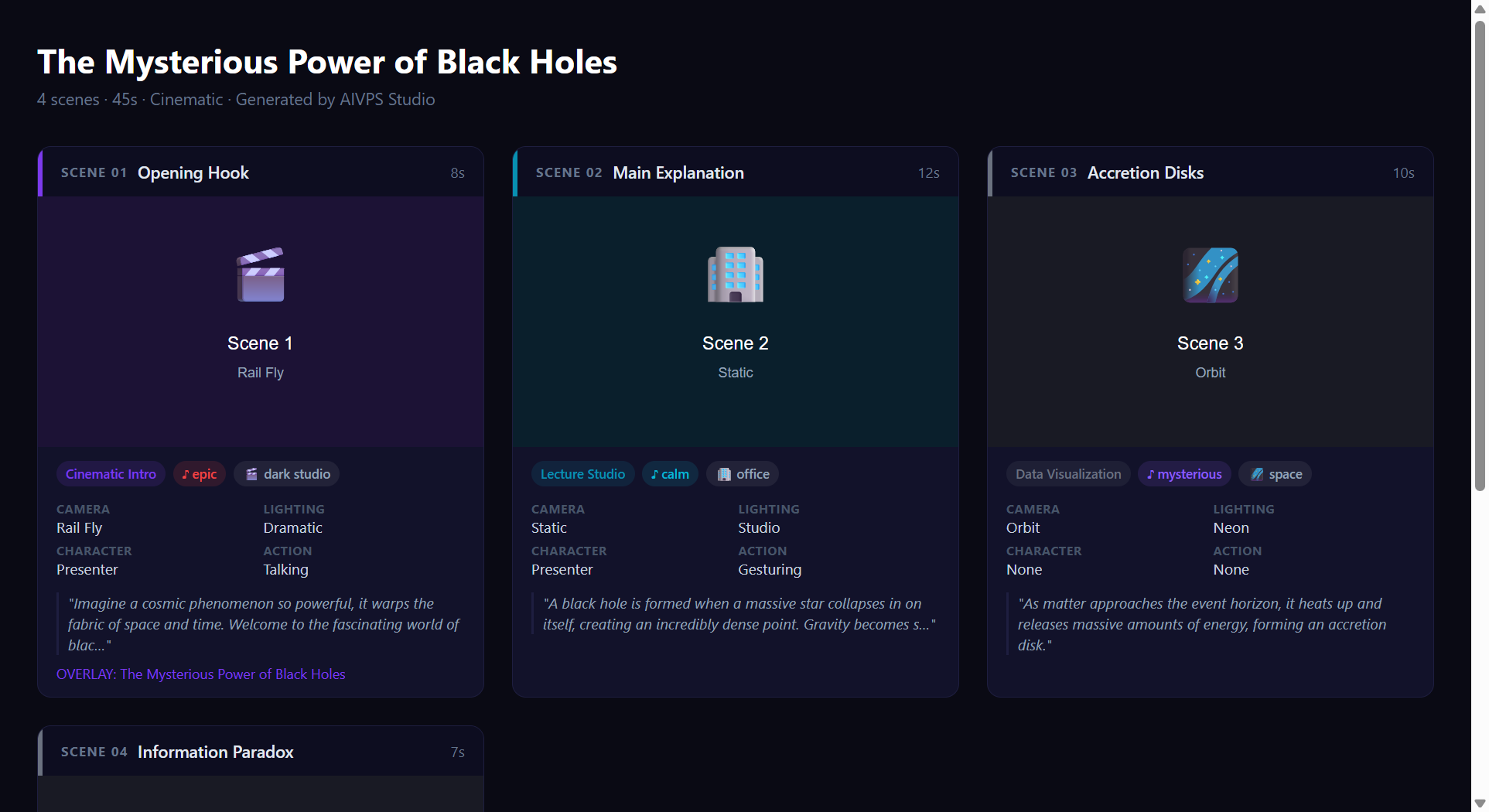
Structured output, not just prose
The studio generates stories with deliberate structure — scene breakdown, character arcs and turns — rather than an undifferentiated block of text. That structure is what makes the output usable downstream: a scene carrying its own camera move, lighting, character, action and narration can be handed to a production pipeline directly.
A Streamlit dashboard handles single and batch generation, keeps a saved library, and supports continuation and variation modes so a promising draft can be pushed further instead of regenerated from scratch. spaCy identifies characters and locations and highlights them inline, and analytics report story metrics and word frequency across the library.
Generic text generation is not useful to a production team
Asking a model for "a story" returns prose. Prose is not what a screen production consumes — it needs scenes, and each scene needs to specify who is in it, what happens, how it is shot and how it is lit.
The second problem is iteration. A writer rarely wants a different story; they want this story, changed. Regenerating from scratch loses whatever was working.
Constrain the shape, then vary within it
Generation is steered toward a scene-level structure rather than free prose, with genre, tone, length and creativity exposed as controls. Continuation and variation operate on an existing piece, so a draft can be extended or re-angled while keeping what works.
Entity extraction runs over the result to surface characters and locations — useful both as a reading aid and as a consistency check across a library.
What it does
Generation
- Scene-level structure
- Genre, tone, length and creativity controls
- Single and CSV batch modes
Iteration
- Saved story library
- Continuation of an existing draft
- Variation without full regeneration
Analysis
- Character and location extraction
- Inline entity highlighting
- Story metrics and word frequency
Actual stack
What it is for
⚠️ A drafting tool, not a writer
Output is starting material. It is structurally sound and useful to iterate on; it is not finished writing, and the project does not claim otherwise.
Quality tracks the local model in use. No evaluation of narrative quality has been run, so no such claim is made.
Structured output has somewhere to go
The scene-level format this produces is the same shape the AVS pipeline consumes — which is why it was built this way rather than as a prose generator.